
Introduction
In today's competitive landscape, understanding your customer's journey is no longer a strategic advantage—it's a necessity. For businesses leveraging a CRM, Sales Funnel Analytics is the discipline that transforms raw customer data into a clear roadmap for growth. It's the process of measuring, analyzing, and optimizing the path prospects take from their first touchpoint to becoming a loyal customer. With early AI adopters seeing 30% better win rates throughout their sales funnel, a data-driven approach is paramount.
This comprehensive guide will demystify CRM sales funnel analysis, providing actionable strategies to turn your sales pipeline into a predictable, high-performance engine.
👉 Ready to master your CRM funnel? Discover tailored software with AuthenCIO.
Understanding the Sales Funnel: A Primer for CRM Professionals
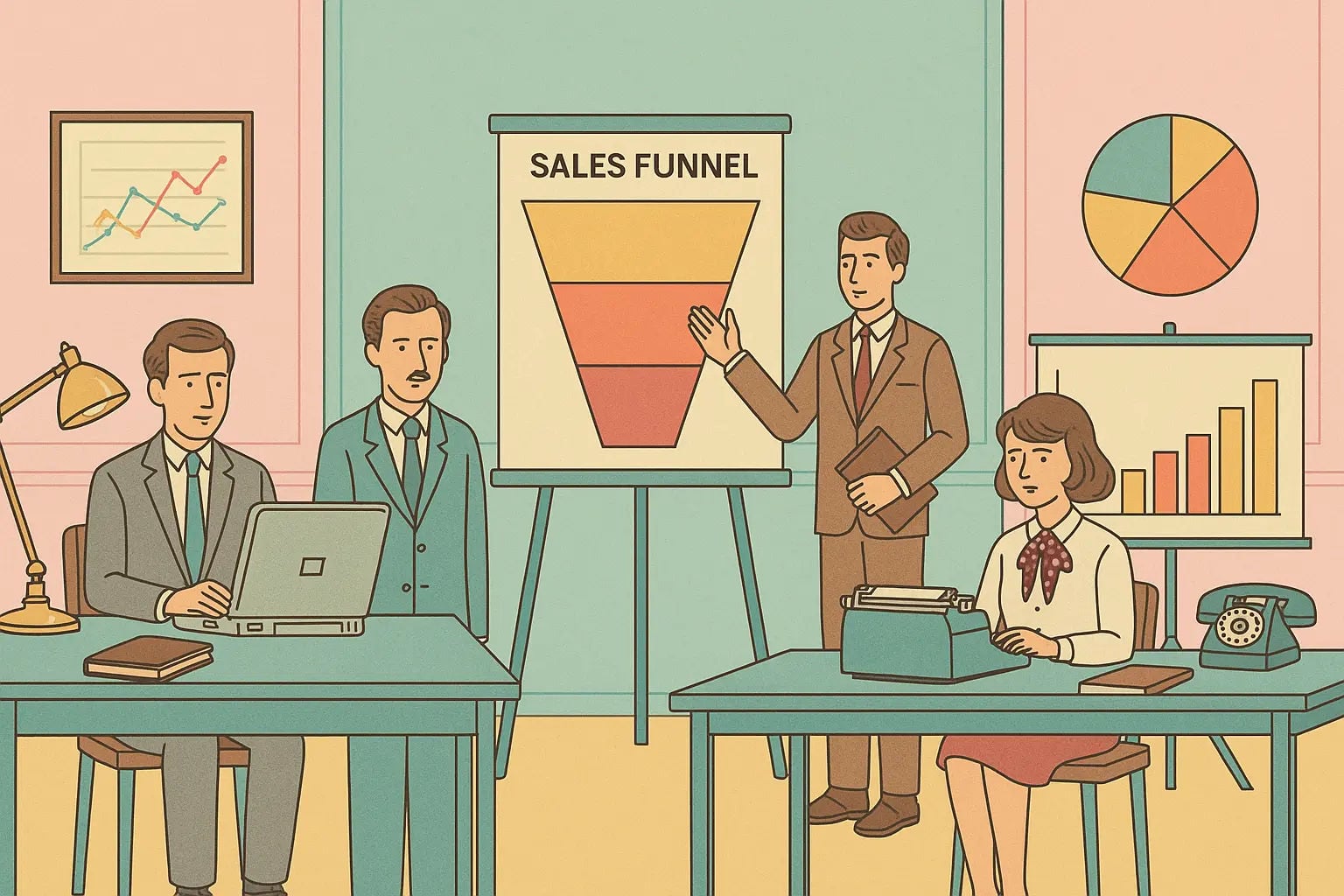
Before diving into the analytics, it's crucial to have a solid grasp of the sales funnel itself. Think of it as a visual representation of the customer journey, a framework that helps you understand and manage your sales process from a broad audience to individual paying customers.
Defining the Sales Funnel: From Prospect to Advocate
A typical sales funnel consists of several distinct stages, though the specific terminology can vary. Each stage represents a deeper level of commitment from the prospect:
Awareness: The prospect becomes aware of your brand and solution.
Interest: They demonstrate interest by actively seeking more information.
Consideration: They evaluate your solution against competitors.
Intent: They signal a strong intention to buy, perhaps by requesting a demo or quote.
Evaluation: The final decision-making and negotiation phase.
Purchase: The deal is closed, and the prospect becomes a customer.
Post-Purchase: The focus shifts to retention, satisfaction, and turning customers into brand advocates through upselling and loyalty programs.
🚀 Find out which CRM can clarify your funnel — Try AuthenCIO’s AI recommendations!
Why Sales Funnel Analytics is Crucial for CRM Users
For CRM users, sales funnel analytics (often used interchangeably with sales pipeline analytics) is the key to unlocking the full potential of your platform. It moves your team from guesswork to a data-driven sales strategy. By analyzing your funnel, you can:
Identify Bottlenecks: Pinpoint exactly where prospects are dropping out of the sales process.
Improve Forecasting: Generate more accurate sales forecasts based on historical conversion rates. As of 2025, leading firms are improving forecast accuracy by up to 35%, with some advanced platforms achieving up to 96% accuracy.
Optimize Resource Allocation: Focus your sales and marketing efforts on the channels and activities that generate the most qualified leads and highest conversion rates.
Enhance Customer Experience: Understand customer behavior to deliver more personalized and timely interactions.
Platforms like Zoho, Freshworks, and Pipedrive are built to track this journey, but it's the analysis of that data that drives real performance gains.



💡 Let AI guide you to actionable CRM analytics tools — Compare leading options now!
Key Metrics and KPIs for Robust Sales Funnel Analytics
To effectively manage your sales funnel, you need to track the right Key Performance Indicators (KPIs) at each stage. Here’s a breakdown of the essential sales funnel metrics to monitor within your CRM.
Funnel Stage | Metric/KPI | Description/Use |
|---|---|---|
Top-of-Funnel | Lead Volume | Number of new leads entering the funnel |
Lead Source Effectiveness | Which channels drive most leads | |
Cost Per Lead (CPL) | Marketing spend divided by new leads | |
Lead-to-MQL Conversion Rate | % of leads qualified as Marketing Qualified Leads | |
Mid-Funnel | MQL-to-SQL Conversion Rate | % of MQLs accepted as Sales Qualified Leads |
Sales Cycle Length | Time from first touch to deal close | |
Opportunity Win Rate | % of qualified opportunities won | |
Lead Velocity Rate (LVR) | Month-over-month growth in qualified leads | |
Bottom-of-Funnel | Overall Conversion Rate | % of total leads that become customers |
Customer Acquisition Cost | Total cost to acquire a new customer | |
Average Deal Size | Average revenue per closed deal | |
Customer Lifetime Value (CLV) | Revenue expected from customer account lifecycle |
See which CRMs track these metrics best — Get started with AuthenCIO
Calculating Conversion Rates Across Funnel Stages
To identify leaks in your funnel, calculate the conversion rate between each stage. The formula is simple:
(Number of leads in Stage 2 / Number of leads in Stage 1) * 100 = Stage-to-Stage Conversion Rate %
A significant drop-off between any two stages signals a bottleneck that needs immediate attention.
Leveraging CRM Platforms for Advanced Sales Funnel Analytics
Modern CRM platforms are powerful hubs for sales performance analytics. They are designed not just to store data, but to help you visualize and act on it.
Native Analytics Capabilities in Leading CRMs
Industry leaders like Salesforce, Zoho, and Microsoft Dynamics offer robust, built-in analytics suites. These native tools allow you to:
Build custom sales dashboards to visualize your funnel in real-time.
Generate pre-built reports on everything from lead source to sales rep performance.
Set up automated alerts for key events, like a high-value deal becoming stagnant.


Integrating Third-Party Tools for Enhanced Insights
While native tools are powerful, integrating specialized third-party applications can provide deeper insights. For example:
Business Intelligence (BI) Tools: Platforms like Tableau or Power BI can connect to your CRM to perform more complex data modeling.
Sales Engagement Platforms: Tools from providers like Close or Outreach can enrich your CRM data with detailed engagement metrics (email opens, click-throughs, call connections).
Project Management Software: Integrating with tools like Monday.com can help align sales activities with broader company projects and goals.


Customizing Dashboards and Reports for Granular Funnel Visibility
Don't rely on out-of-the-box reports. The true power of a CRM like CRMOne or Pipedrive is customization. Create dashboards tailored to specific roles:
For Sales Reps: A dashboard showing their personal pipeline, open tasks, and progress toward quota.
For Sales Managers: A team-level view of win rates, sales cycle length by rep, and pipeline health.
For Executives: A high-level dashboard tracking CAC, CLV, and overall revenue forecasts.

🤔 Not sure which analytics features matter most? Let AI help you shortlist the best.
Deep Dive into Sales Funnel Stages: Analysis and Optimization Strategies
Understanding the metrics is one thing; using them for sales funnel optimization is another. Here’s how to analyze and improve each stage of the journey.
Awareness Stage: Attracting and Capturing Leads
Analysis: Use your CRM and Google Analytics to track which content, keywords, and channels are driving the most traffic and leads. Are you attracting the right audience?
Optimization: Refine your SEO and content marketing strategy to target your Ideal Customer Profile (ICP). A/B test landing page headlines and calls-to-action (CTAs) to improve lead capture rates.
Interest Stage: Engaging and Qualifying Prospects
Analysis: Monitor email open rates, content download numbers, and webinar attendance. How engaged are your new leads? Are they consuming the content designed to educate them?
Optimization: Implement a lead scoring model in your CRM to automatically qualify leads based on their demographics and behavior. Use marketing automation to nurture leads with personalized email sequences.
Consideration Stage: Presenting Solutions and Building Value
Analysis: Track how many leads request a demo or a free trial. What is the conversion rate from a demo to a qualified opportunity?
Optimization: Ensure your sales team has compelling case studies, testimonials, and ROI calculators. Personalize demos to address the specific pain points of each prospect.
Intent Stage: Overcoming Objections and Driving Commitment
Analysis: Use your CRM to log common objections. Are there recurring themes around price, features, or implementation?
Optimization: Create a library of battle cards and objection-handling scripts for your sales team. Proactively address common concerns in your sales collateral and follow-up communications.
Evaluation Stage: Finalizing Decisions and Closing Deals
Analysis: What is the average time spent in the negotiation stage? Where do deals most often stall?
Optimization: Streamline your proposal and contract generation process. Offer clear, transparent pricing and be prepared to articulate your value proposition against competitors.
Purchase Stage: Transaction Completion and Onboarding
Analysis: Is the checkout or contracting process smooth? How long does it take for a new customer to be fully onboarded?
Optimization: Simplify the purchasing process with e-signatures and clear instructions. Create a structured onboarding program to ensure customers achieve their first “win” with your product quickly.
Post-Purchase Stages: Retention, Advocacy, and Upselling
Analysis: Track customer health scores, product usage rates, support ticket volume, and Net Promoter Score (NPS).
Optimization: Develop a proactive customer success program. Identify happy customers and create a formal process to ask for referrals and reviews. Use CRM data to spot upselling and cross-selling opportunities.
👉 Talk to an expert or let AI suggest analytics tools that fit your needs!
Advanced Analytical Techniques for Sales Funnel Optimization
Once you've mastered the basics, you can layer on more sophisticated techniques to gain a competitive edge. The industry is rapidly shifting from descriptive analytics (what happened) to predictive sales analytics (what will happen).
Attribution Modeling: Understanding Touchpoint Impact
Attribution modeling assigns credit to the various marketing touchpoints a prospect interacts with before converting. Instead of just crediting the last touch (e.g., the demo request), multi-touch attribution models (linear, time-decay, U-shaped) provide a more holistic view of which channels are most influential across the entire customer journey analytics.
Cohort Analysis: Tracking Performance Over Time
Cohort analysis sales groups users based on a shared characteristic, typically the month they signed up. By tracking the behavior of these cohorts over time, you can understand trends in customer retention, feature adoption, and lifetime value, separating long-term trends from short-term noise.
Predictive Analytics: Forecasting Future Sales Outcomes
This is where AI and machine learning enter the picture. Predictive analytics uses your historical CRM data to forecast future outcomes. It can identify which leads are most likely to close, predict customer churn, and provide more accurate revenue forecasts. With 81% of sales teams now using AI, those leveraging predictive capabilities are seeing significant performance boosts.
A/B Testing and Experimentation within the Funnel
A data-driven culture embraces experimentation. Continuously run A/B tests on key elements of your sales and marketing process: email subject lines, landing page layouts, sales script variations, and pricing presentations. Use the data to make incremental improvements that compound over time.
Common Sales Funnel Bottlenecks and How to Address Them
Streamline your software evaluation process
Your analytics will inevitably reveal weaknesses in your funnel. Here are some of the most common bottlenecks and how to fix them.
Identifying Drop-off Points with Data
The Problem: A high number of leads are generated, but very few become MQLs.
The Cause: Your marketing message may be attracting the wrong audience, or your definition of a “lead” is too broad.
The Fix: Refine your audience targeting in ad campaigns. Implement stricter lead qualification criteria and use lead scoring to focus on the most promising prospects.
Strategies for Improving Lead Quality and Nurturing
The Problem: MQLs are not converting into sales opportunities. There's a disconnect between marketing and sales.
The Cause: Leads are being passed to sales too early, before they are properly nurtured and educated.
The Fix: Develop a lead nurturing program with targeted content for each stage of the buyer's journey. Ensure marketing and sales have a shared, formal definition of a Sales Qualified Lead (SQL).
Optimizing Sales Processes for Higher Conversion Rates
The Problem: Opportunities stall in the pipeline for long periods and eventually close-lost.
The Cause: Inefficient sales processes, lack of follow-up, or failure to demonstrate sufficient value.
The Fix: Map out your sales process and identify areas for automation. Implement a clear follow-up cadence for all opportunities. Provide ongoing training to your sales team on value-based selling and negotiation.
Implementing a Data-Driven Sales Culture: Best Practices for CRM Users
Tools and techniques are only effective if they are embraced by your team. Fostering a data-driven sales strategy is paramount.
Setting Clear Goals and Benchmarks
Your analytics should be tied to clear business objectives. Set specific, measurable, achievable, relevant, and time-bound (SMART) goals for each stage of the funnel. Use industry benchmarks to see how you stack up, but focus on improving your own historical performance.
Regular Reporting and Performance Reviews
Data should be a central part of your team's regular meetings. Hold weekly pipeline reviews and monthly performance reviews where you discuss the metrics. The goal isn't to micromanage but to collaboratively identify challenges and brainstorm solutions.
Training Your Sales Team on Analytics Utilization
Don't assume your team knows how to use the analytics tools in your CRM. Provide formal training on how to read reports, interpret data, and use those insights to prioritize their activities. Show them how using data can help them close more deals and earn more commission.
Try AuthenCIO
Find your perfect CRM match today — See how AuthenCIO works in seconds!
Conclusion: The Imperative of Sales Funnel Analytics for Modern Sales Operations
Mastering sales funnel analytics is no longer optional. It's the core competency that separates high-growth sales organizations from the rest. By systematically tracking metrics, leveraging the full power of your CRM, and fostering a culture of data-driven decision-making, you can transform your sales funnel from a leaky bucket into a well-oiled machine that consistently drives revenue and growth.
The journey starts with understanding your data, but the destination is predictable success. The key is to begin now, identify one or two key areas for improvement, and build momentum through incremental, data-backed wins.
Choosing the right CRM with the analytics capabilities that fit your business is the critical first step. Don't leave that decision to chance.
👉 Try Authencio.com for free - a vendor-neutral platform that helps businesses compare and choose the right CRM without the guesswork or sales pressure.